Our Research Areas
Research
We tackle fundamental and applied challenges at the intersection of optics, combustion, plasma physics, and computational science.
Research Overview
Our work spans four interconnected research directions, combining advanced experimental diagnostics with high-fidelity numerical simulation.
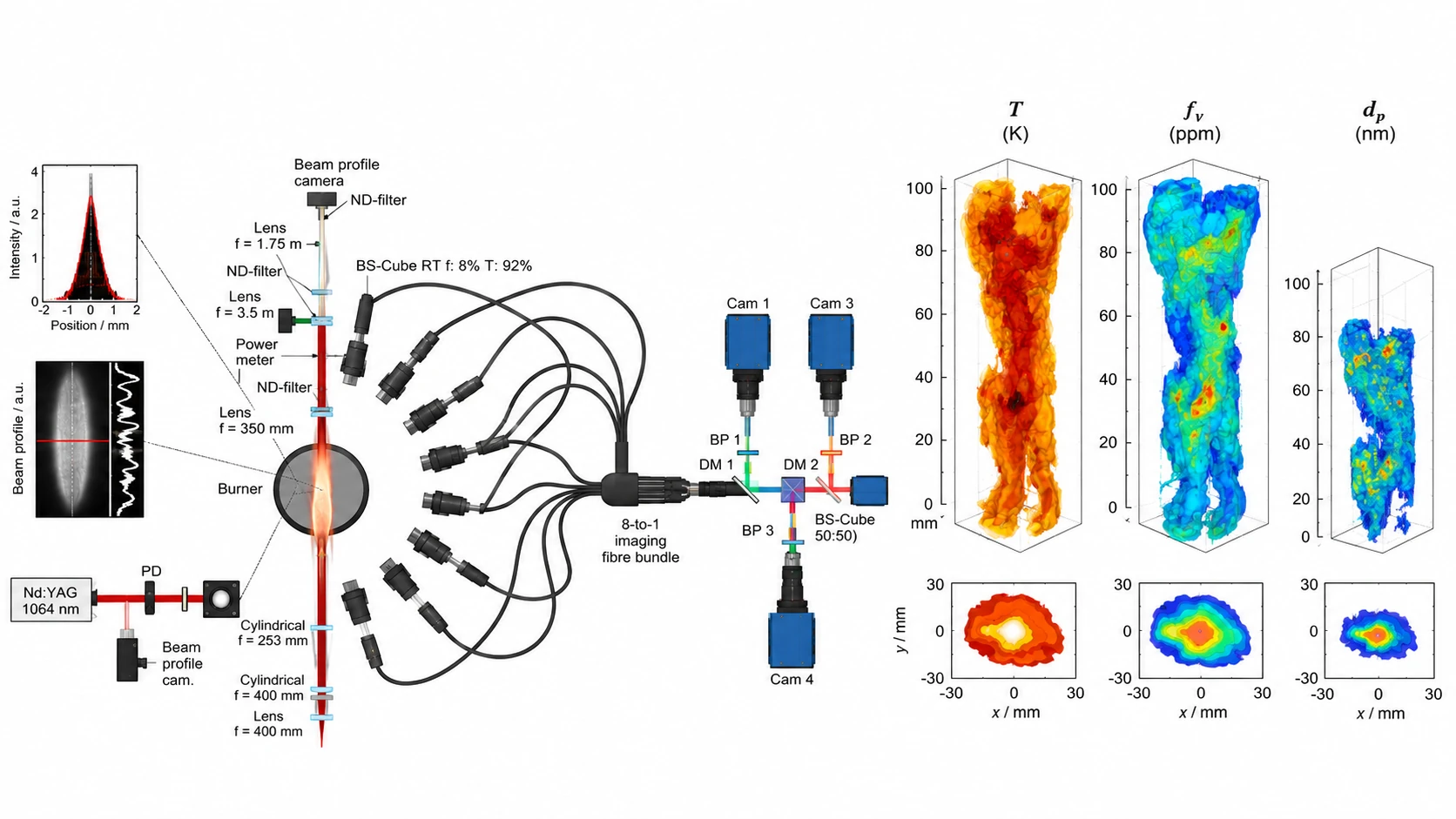
Extreme Reaction Flow Diagnostics
Advanced optical and laser-based diagnostics for probing high-temperature, high-pressure reacting flows in aero-engines and hypersonic vehicles.
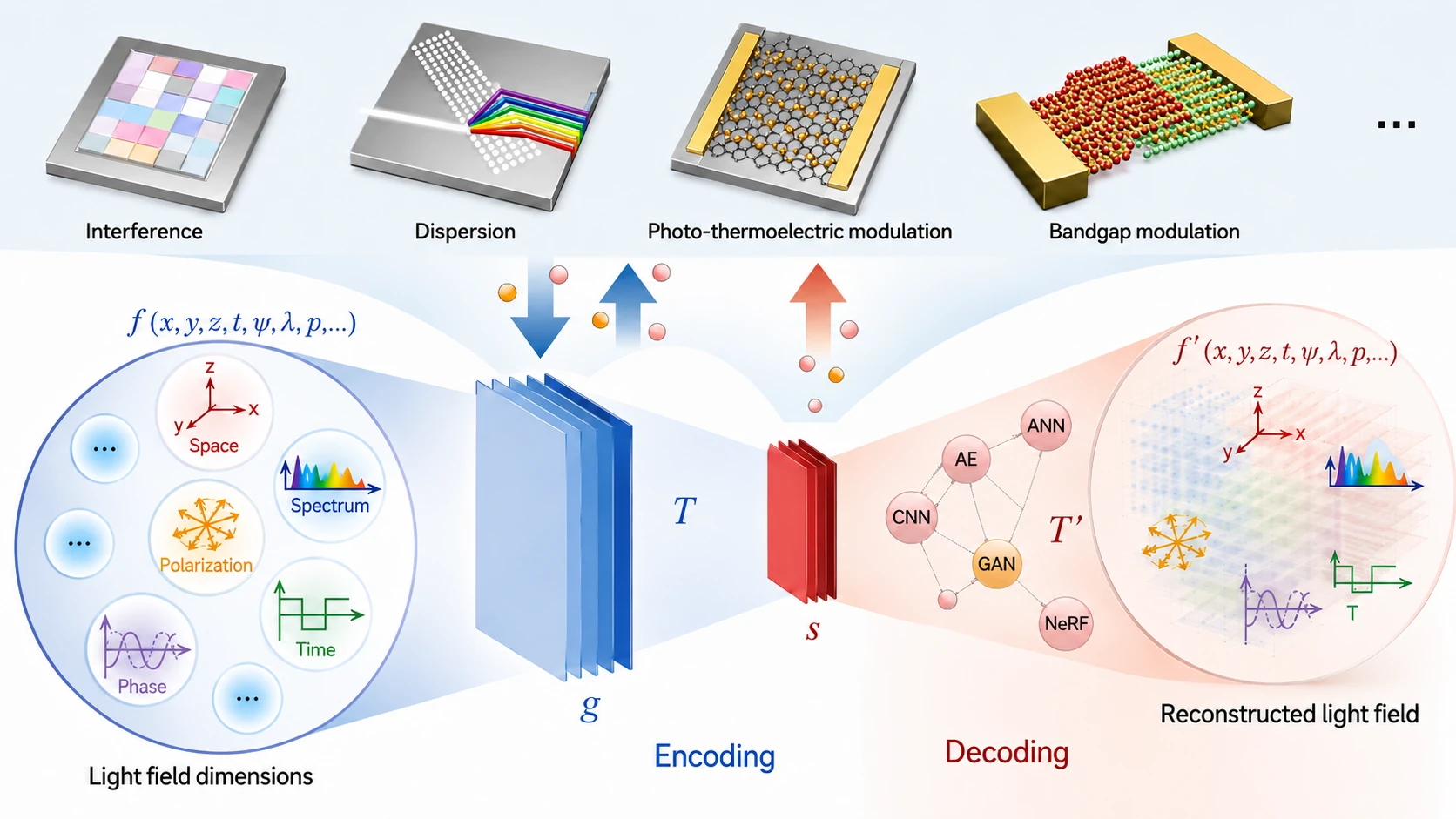
Computational Imaging & Miniature Spectrometers
Light-field imaging, linear/nonlinear tomography, and miniature computational spectrometers for high-dimensional optical sensing.
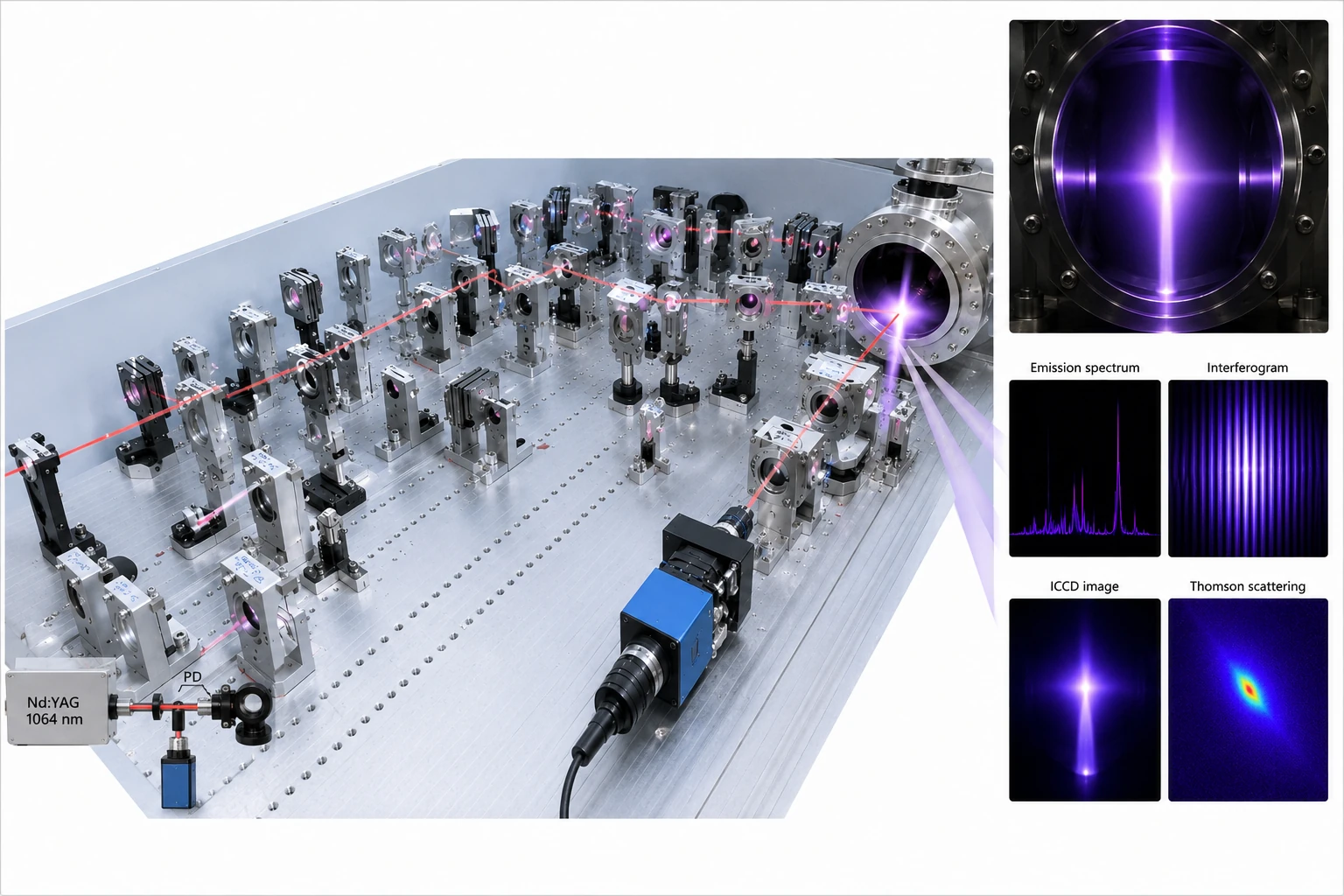
Ultrafast Laser Spectroscopy & Plasma Energy Conversion
Femtosecond laser spectroscopy, plasma-assisted energy conversion, and ultrahigh-temperature materials synthesis.
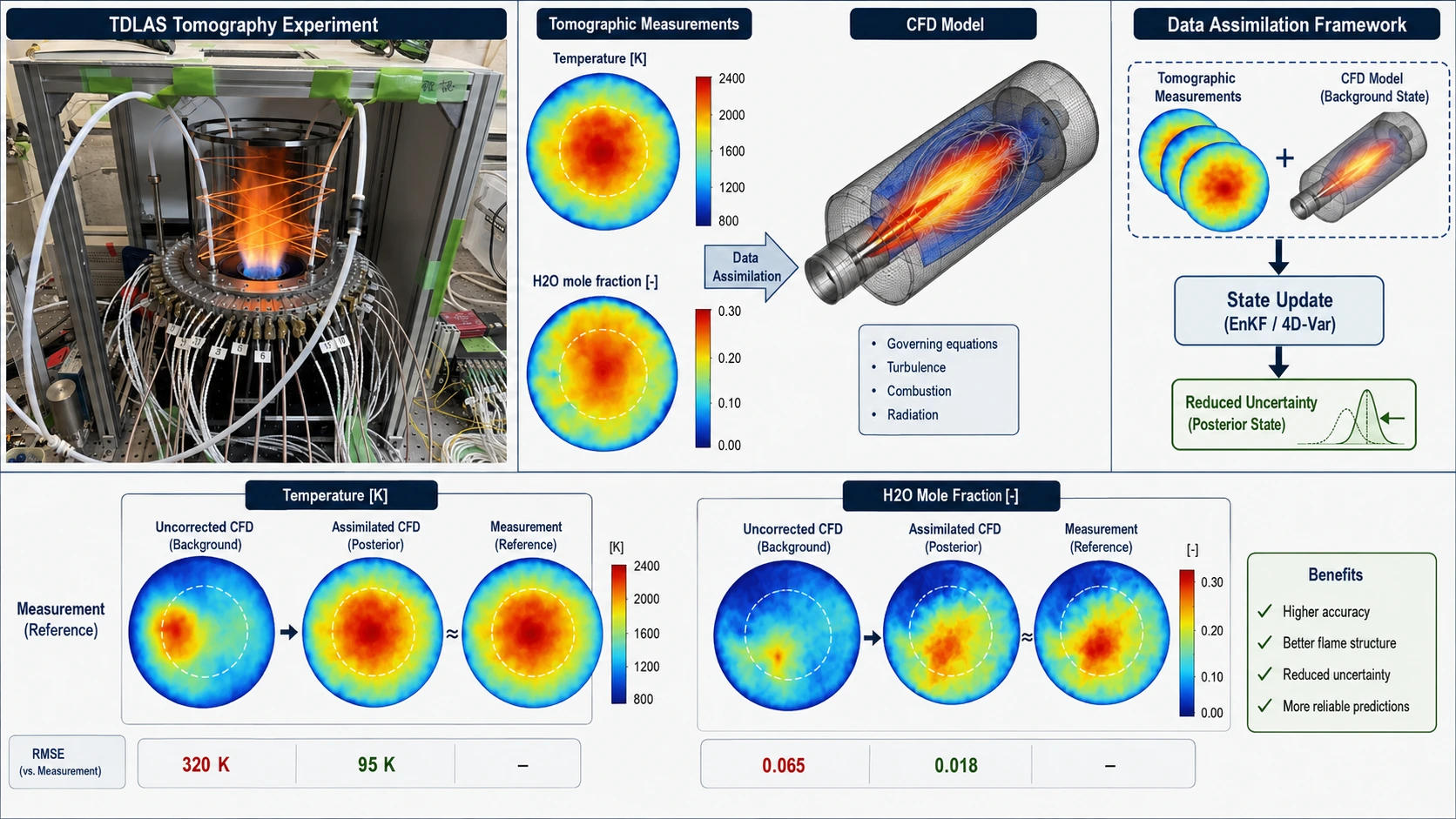
Reacting Flow Simulation & Data Assimilation
High-fidelity CFD, machine learning-augmented combustion modeling, and data assimilation for turbulent reacting flows.
Detailed Research Areas
Our research integrates experiment, theory, and computation.
Extreme Reaction Flow Diagnostics
Our team develops and applies cutting-edge optical diagnostic techniques to probe extreme reaction flows. We employ planar laser-induced fluorescence (PLIF), tomographic absorption spectroscopy, background-oriented schlieren (BOS), and holographic imaging to measure temperature, species concentration, and flow dynamics in harsh environments. These techniques are applied to study combustion phenomena in aero-engines, hypersonic propulsion systems, and next-generation power generation.
Key Focus Areas
Computational Imaging & Miniature Spectrometers
We pioneer computational imaging techniques that synergize optical hardware with advanced reconstruction algorithms. Our work includes light-field imaging for 3D flame reconstruction, nonlinear tomographic methods for enhanced spatial resolution, and miniature computational spectrometers that achieve laboratory-grade performance in compact form factors. These technologies enable new capabilities for high-speed, multi-dimensional optical sensing in both scientific and industrial applications.
Key Focus Areas
Ultrafast Laser Spectroscopy & Plasma Energy Conversion
We employ ultrafast laser techniques to probe nonequilibrium plasma chemistry, combustion kinetics, and energy conversion processes at fundamental timescales. Our research spans femtosecond cavity-enhanced absorption spectroscopy for sensitive combustion species detection, plasma-assisted ammonia synthesis and oxidation, and ultrahigh-temperature materials synthesis using stable atmospheric-pressure plasma. These efforts bridge fundamental photophysics with practical energy and propulsion applications.
Key Focus Areas
Reacting Flow Simulation & Data Assimilation
Our team develops efficient, high-accuracy numerical methods for simulating reacting flows. We combine large-eddy simulation (LES) with detailed chemical kinetics, augmented by machine learning models to reduce computational cost while maintaining fidelity. Data assimilation techniques integrate experimental measurements with numerical simulations for enhanced prediction. These tools are applied to low-carbon combustion technologies, spray combustion, flash boiling, and pollutant formation in gas turbines and internal combustion engines.